
Wild Ese Eja Experience

2 days / 1 nights
US390
Itinerary
Day 1
If you come to the Amazon by bus or arrive on the first flight and going back on the last fly or taking a bus again you have a chance, to do this very wild experience here in the forest of the Ese Eja Infierno native community. We are waiting for you at the airport or terminal station. A short breakfast in Puerto Maldonado city and then we move to the Ese Eja Infierno native community where our stay will be. The Ese Eja family welcomes us to the heart of the Infierno community.
INFIERNO WALK
We prepare for a walk of 3 or 4 hours through the primary Amazonian forest. We will get in ways known only by ese ejas natives so we will have high chances of sightings. Among the species that we can find here we have the squirrel monkey, capuchin monkey, pichico monkey, titi monkey. With luck in the ravine we can see some dwarf alligator or anaconda.
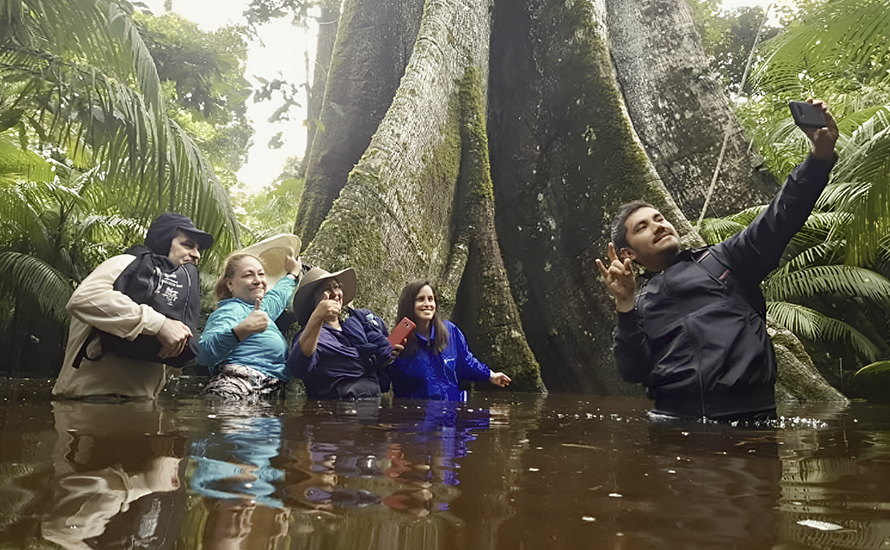
We will pass through swampy ravines, we will fish with our handmade stick and we will carry out a survival demonstration. Our experienced guide will be making a campfire collecting dry branches, thus experimenting and learning to survive as the ancestors did Ese Eja in this tropical forest.
We will open the way and go through this primary forest.
The Infierno Walk is an experience where we will learn to walk in the forest, using our ability, our senses, with care and responsibility. It is a challenge for travelers looking for an authentic experience in the middle of the jungle.
As evening falls, before it becomes dark we return from this hectic incursion of a lot of physical effort. Dinner awaits us.
DINNER
The great night walk
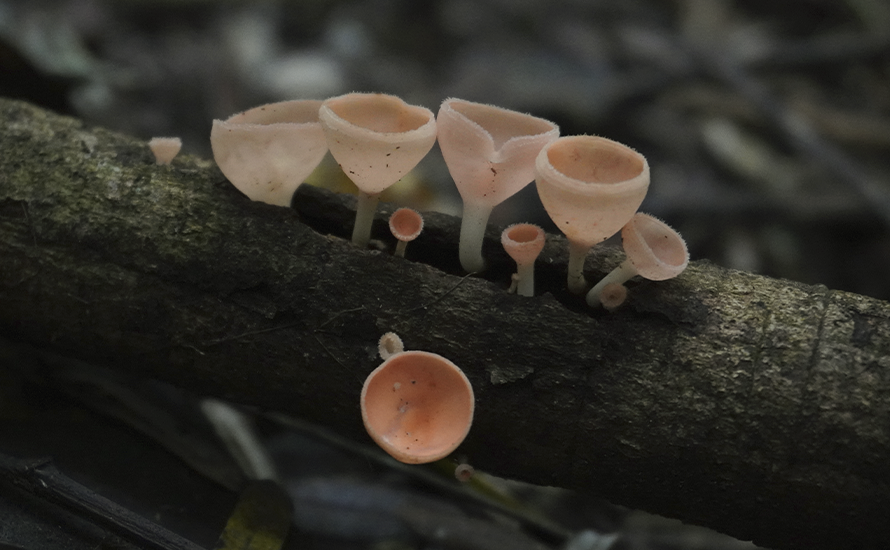
In the darkness of the night we explore the other side of the Amazon by taking a walk with the help of our flashlights. We will enter for about 2 hours in search of wildlife such as: arachnids, frogs, snakes and mammals. It’s time to open our senses well, we hear the sound of birds like owls or mammals like night monkeys and king Kinkaju. We will be surprised to look at the camouflages of caterpillars and moths. luminous mushrooms, armadillos and tarantulas.
Day 2
macaw CLAY LICK
COLLPAS: The word collpa is Quechua which means “salty soil” There are two different types of collpas: the one found along the rivers, better known as: “macaw clay lick” we also have: the “mammals clay lick” the one that is inside the Forest. The macaw clay lick are a wall of clay alone the river bank or streams, in Tambopata you can find up to almost 100 between macaw and mammals clay licks.
Every day these birds fly in direction of their clay licks that they usually visit to feed on clay, they consume a lot of minerals comming from the clay, especially SODION.
Parrots and macaws feed on green or ripe fruits. So these foods do not contain enough mineral salts, it is the reason they consume of clay to complement their daily diet.
If you are a lover of parrots and macaws, join us and share this experience and help the preservation of macaw clay licks and at the same time we will preserve the macaws and parrots species.
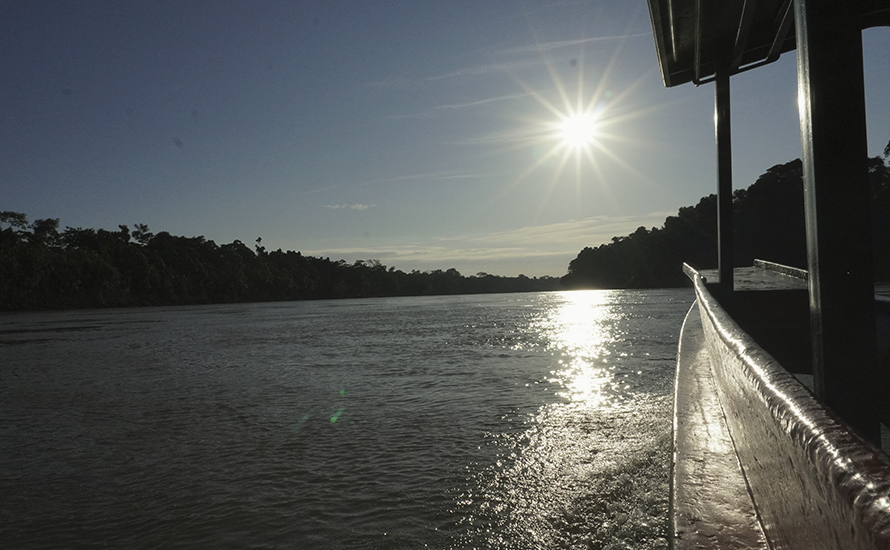
The activity consists of getting up very early and walk to the boat for 30 minutes. We will arrive and from the boat we wait for the parrots and macaws to congregate first on the trees, they hope to get together in a regularly large group because of how sensitive they are to their predators. Once safe they begin to land little by little, one of them will be the first to eat clay and then the others continue to go down to the wall, where then it becomes a show that can only be seen in Tambopata.
Stunning photographs when they land, when they fly and when they do the famous flash, which is the most fascinating thing.
LUNCH
anacondas Search
The anaconda: A constrictor serpent, known as the heaviest in the world, which lives in South America and Central America. The snake is semi-aquatic, not poisonous and hunts by suffocat its prey.
Its habitat are: swamps, rivers, streams. They are most seen in the Peruvian Amazon in floating forests (swamps). It feeds on large prey such as: deer, huangana tapirs, sajinos, rodents, birds and alligators.
Weight: It weighs around 250 kilograms (551 pounds).
Size: According to the study (science), they reach 9.1 meters (30 feet) long, local experience had a sighting of up to 15 meters (49 feet) long.
Curiosity: They are semi-quatic diurnal or nocturnal, the more they remain in the water, they go out to hunt in their natural habitat ras of the water they wrap their prey and suffocate it, their digestion is slow that is why!… When they eat a mammal, it is exposed to the Sunlight, and it helps for the decomposition of the food at the same time, it regulates its body temperature.
To carry out this activity, we will walk 45 minutes, we will arrive at a floating forest covered with grass and palm trees and we will get on a canoe. Firstly, we will begin to see and listen to the parrots and macaws that this forest has, a very exciting adventure with our community guide who is very experienced in this activity, very gently we will row in silence and try to find an anaconda on the grass, they are very shy to the Presence of humans The idea is to stealthily observe to be able to photograph and then see the details of the body, a head that is impressive, this experience tells of a lot of silence and patience. We will take our box lunch. We will have lunch in the forest This will make our activity more authentic and wild, we will return in the afternoon to our lodge, coexisting this experience with us you are helping the preservation and conservation of the anacondas and its natural habitat.
Return
We will say goodbye to the jungle and head back to Puerto Maldonado city. Our transport will take us to the airport or terminal in Puerto Maldonado city. It’s time to say until the next one to the family Ese Eja. Good trip!
Contact our Reservation Advisor by clicking here
FOR MORE INFO & BOOKING
THIS IS AN INQUIRY FORM. No charges or automatic payments will be made for completing this form.
Frequently Asked Questions
How do I reserve?
Experiential tourism, also known as immersion tourism, is a form of travel that focuses on the deep and authentic experience of a local culture. Instead of simply visiting tourist places, travelers actively participate in the daily life of the community, learning about their customs, traditions and way of life.
How do I get to Madre de Dios?
Experiential tourism, also known as immersion tourism, is a form of travel that focuses on the deep and authentic experience of a local culture. Instead of simply visiting tourist places, travelers actively participate in the daily life of the community, learning about their customs, traditions and way of life.
Who are the community Ese Eja of Infierno?
Experiential tourism, also known as immersion tourism, is a form of travel that focuses on the deep and authentic experience of a local culture. Instead of simply visiting tourist places, travelers actively participate in the daily life of the community, learning about their customs, traditions and way of life.
additional information
Contact us
Follow us