
Extreme nature
4 Days / 3 Nights
USD580
A journey into the deepest layers of the Amazon, guided by the ancestral knowledge of an Ese Eja guide. Navigate the Tambopata River in search of caimans and elusive wildlife, explore the floating forest where anacondas silently move through the wetlands, and venture into the nocturnal jungle beneath the sounds of darkness. Walk through primary rainforest trails known only to our native guides, and witness the hidden life of mammals gathering at mineral-rich clay licks. More than an expedition, this is an immersive encounter with the rhythms, silence, and untamed spirit of the Peruvian Amazon.

INTINERARY
Day 1
Pick up from the airport or terminal stations. We move to the Ese Eja Infierno native community where our stay will be. The Eja family welcomes us to the heart of the Infierno community.
LUNCH
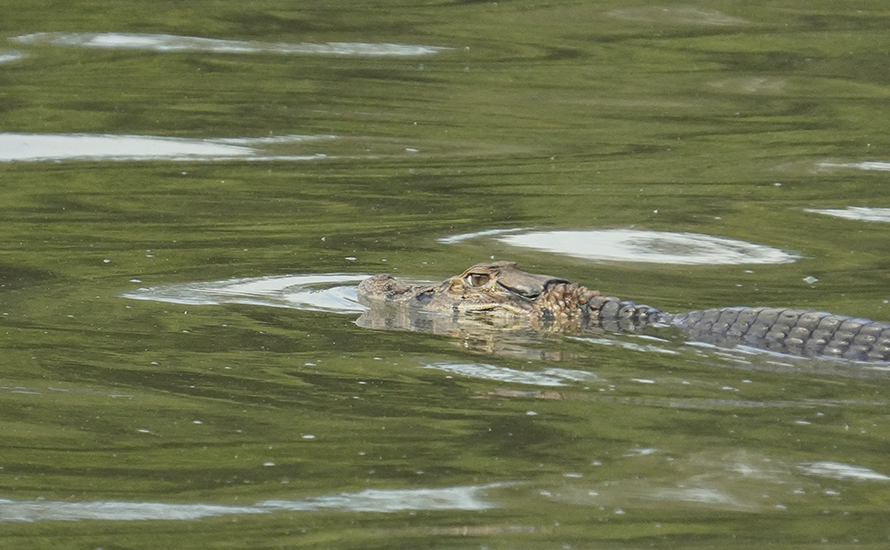
BOAT RIDE AND CAIMAN SEARCH
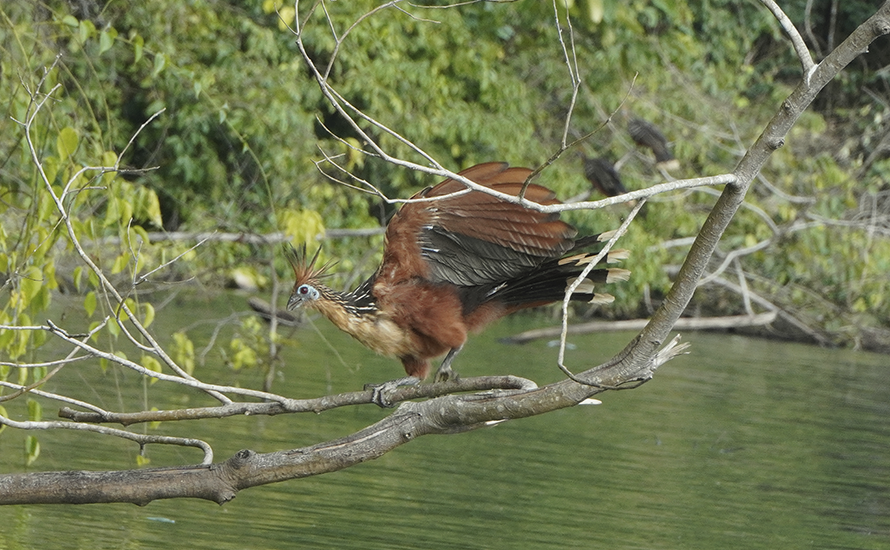
We walk about 15 minutes to the river port. We get on the boat and sailed upriver through the Tambopata. We open our senses and prepare for the sighting of wild animals that live on the river banks: alligators, capibaras, turtles or the impressive Jaguar. herons, macaws and toucans are seen on the tops of the trees or showing up their flight over the horizon of the river. We are familiar with the fauna and this vast ecosystem.
This is a tour of about 3 hours, in the evening we will be able to appreciate one of the most emblematic gifts of this place, to appreciate the sunset from the river. A spectacle of contrasts that inspires.
The sky darkens, but our senses are sharpened. It’s time to search for the white alligator and nocturnal animals. Our guide will use a powerful beacon and its experienced ability to search between the edges that brightness that the eyes of the alligators reflect in the direct light. Here patience and stillness is key to being able to locate them. We will approach a prudent distance to be able to appreciate the detail of these reptiles.
Day 2
ANACONDAS SEARCH
The anaconda: A constrictor serpent, known as the heaviest in the world, which lives in South America and Central America. The snake is semi-aquatic, not poisonous and hunts by suffocat its prey.
Its habitat are: swamps, rivers, streams. They are most seen in the Peruvian Amazon in floating forests (swamps). It feeds on large prey such as: deer, huangana tapirs, sajinos, rodents, birds and alligators.
Weight: It weighs around 250 kilograms (551 pounds).
Size: According to the study (science), they reach 9.1 meters (30 feet) long, local experience had a sighting of up to 15 meters (49 feet) long.
Curiosity: They are semi-quatic diurnal or nocturnal, the more they remain in the water, they go out to hunt in their natural habitat ras of the water they wrap their prey and suffocate it, their digestion is slow that is why!… When they eat a mammal, it is exposed to the Sunlight, and it helps for the decomposition of the food at the same time, it regulates its body temperature.
To carry out this activity, we will walk 45 minutes, we will arrive at a floating forest covered with grass and palm trees and we will get on a canoe. Firstly, we will begin to see and listen to the parrots and macaws that this forest has, a very exciting adventure with our community guide who is very experienced in this activity, very gently we will row in silence and try to find an anaconda on the grass, they are very shy to the Presence of humans The idea is to stealthily observe to be able to photograph and then see the details of the body, a head that is impressive, this experience tells of a lot of silence and patience. We will take our box lunch. We will have lunch in the forest This will make our activity more authentic and wild, we will return in the afternoon to our lodge, coexisting this experience with us you are helping the preservation and conservation of the anacondas and its natural habitat.
dinner
The great night walk
In the darkness of the night we explore the other side of the Amazon by taking a walk with the help of our flashlights. We will enter for about 2 hours in search of wildlife such as: arachnids, frogs, snakes and mammals. It’s time to open our senses well, we hear the sound of birds like owls and night monkeys. We will be surprised to look at the camouflages of caterpillars and moths. luminous mushrooms, armadillos and tarantulas.
Day 3
BREAKFAST
TRES CHIMBADAS LAKE
Very early in the morning we sail upstream and after walking inside a secondary forest we arrive at our Lake Tres Chimbadas, get on a canoe and paddle in search of wildlife and enjoy the natural environment with calm waters and active life of animals and plants in its environment, a super striking ecosystem for nature lovers. It houses various species of fauna either within its waters or in its surroundings. Varieties of fish like the famous Piranhas Four types In this lake, we have the great reptiles The Great Black Caiman and the Anaconda, birds that are residents of this habitat such as the Shanshos, Garzas, Herons, King Fisher between Toucans and Macaws that are perched in the trees and then make their flight known crossing through the middle of the lake with distracting noises and their colors that reflect with the sunshine.
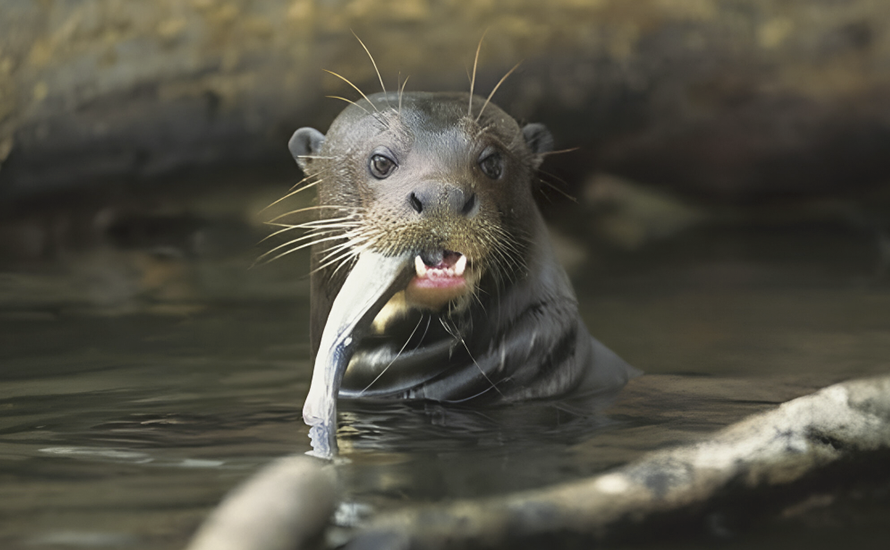
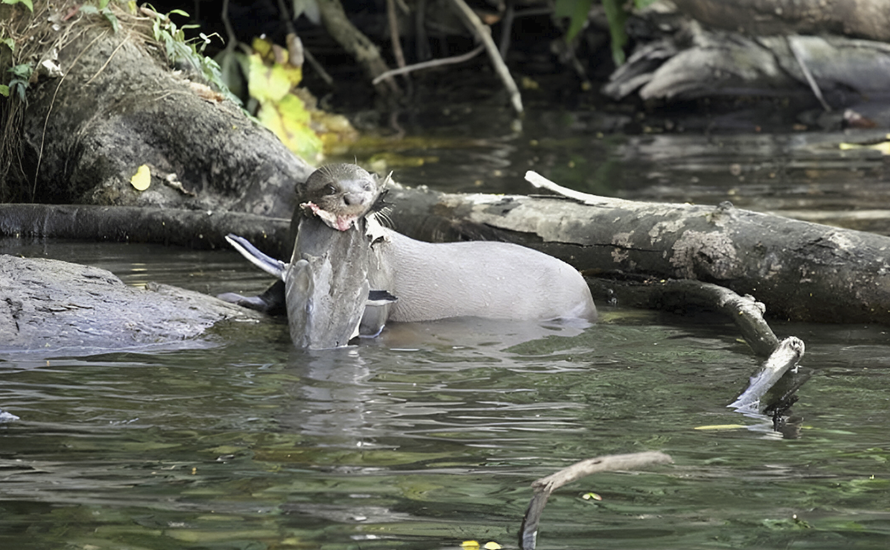
The most impressive thing about Lake Tres Chimbadas is the family of giant otters or river wolves, an endangered species. With a lot of luck we will have the chance to see these semi-water mammals that over the years have adapted according to the ecosystem where they live and the evolution of skills. They are expert fisher and swimmers since their main diet is fish, they have a flat tail, interdigital membranes, their whiskers that feel the vibrations of the fish inside the water is impressive to see the otters or river wolves fishing. When we visit this lake we observe the otters, take care of the species, and we preserve the ecosystem while maintaining the balance of a healthy and protected environment.
LUNCH
MAMMAL CLAY LICK
(COLLPA meaning: “salted earth”)
In the afternoon, we head into the primary forest to reach the mammal clay lick hiding spot, where animals such as peccaries, deer, or perhaps a tapir can be observed, as well as birds like wild guans.
The jaguar is attracted to these mineral deposits where they wait for their prey.
These animals feed on the clay in the lick which contains mineral salts such as SODIUM. This mineral helps complement their daily diet since fruits do not contain enough salts. This is the main reason why they look for earth with SODIUM.
The mammal clay lick offers a unique opportunity to witness secret behaviors of wild fauna.
Here, animals emerge from the dense foliage to consume mineral-rich clay, an instinctive act that helps them balance their diet in a place where salt is very precious.
DINNER
Day 4
BREAKFAST
RETURN
After breakfast, we will say goodbye to the jungle and head back to Puerto Maldonado city. Our transport will take us to the airport or terminal in Puerto Maldonado city. It’s time to say until the next one to the family Ese Eja. Good trip!
Contact our Reservation Advisor by clicking here
FOR MORE INFO & BOOKING
THIS IS AN INQUIRY FORM. No charges or automatic payments will be made for completing this form.
Frequently Asked Questions
What is community-based (experiential) tourism?
It consists of sharing activities that immerse travelers in the daily life of local communities. Visitors actively participate in agricultural and artisanal tasks while experiencing ancestral customs and traditions, creating a deep and authentic connection with the local culture.
How do i get to madre de dios (Infierno Native Community)?
- From Lima: 1 hour 20 minutes by plane to Madre de Dios
- From Cusco: 30 minutes by plane to Madre de Dios
- From Cusco: 8 hours by car to Madre de Dios
What is included in our experiences?
- Round-trip transportation
- Meals
- Guided tours
- Accommodation
- Special dietary requirements (vegetarian or food allergies)
- Water containers for your stay and activities
- Rubber boots for hikes
- All activities according to the selected program
additional information
CONTACT US
Follow us